PAGES FROM MY BOOK OF LOVe

Book of Love materialized out of thin air—or so it seemed in 1985.

 Like a conjurer pulling brightly colored scarves from an empty shirt sleeve, they delivered one surprise after another: a debut single that became an anthem; tour dates supporting Depeche Mode before they’d made an album; a self-titled full-length brimming with indelible originals.

But don’t be deceived. Magic doesn’t just happen. Astonishing audiences requires craft, practice, and study. Book of Love was the product of a specific time and place, plus a shared set of influences. Though the band appeared to emerge fully formed, in truth they grew up right before our eyes and ears.

 The story begins with two kids raised in Connecticut. Their shared surname was merely coincidence; what bonded Susan and Ted Ottaviano was their passion for music and art. “We were both creatives who ended up in the art department in high school, and then we started to blossom as a music team,” Ted recalls. 

 Suburban teens growing up in the wake of punk rock, they’d drive into Manhattan to check out bands like Ramones and The B-52s. “The punk movement encouraged creative people who were non-musicians,” says Susan.

 Ted agrees. “It gave you permission to get on stage, and as long as you had something to say, you could say it however you wanted.”

 After graduating from different art schools in 1983, Ted and Susan reconvened in downtown New York, now joined by one of Susan’s former classmates, Jade Lee. 

 “There were a lot of bands starting out in the East Village at that moment,” recalls Ted. But Book of Love stood apart, organized around a singular concept for a synth-pop band with minimal instrumentation and nursery-rhyme-like lyrics. Ted served as the primary songwriter and played keyboards with Jade (who also played drums), while Susan sang. The trio adopted the moniker Book of Love, a nod to The Monotones’ 1958 doo-wop hit and one of many breadcrumbs pointing back to a deep appreciation for classic pop.

 New York in the ’80s had a vibe like no other, and the members of Book of Love whirled through its nonstop party. This was the golden age of underground dance music: “Blue Monday,” “Planet Rock,” “Din Daa Daa,” “Moody.” Disc jockeys like Danceteria regulars Anita Sarko and Mark Kamins mixed homegrown talent (Madonna, Man Parrish) alongside the latest European imports and peppered their sets with everything from dub reggae to Bo Diddley.

 “We were really inspired by going to clubs and dancing and the music that was happening,” says Susan. But Book of Love fixed their sights beyond the dance floor and concentrated on composition. “Our music has always been in a pop idiom, and we felt more concerned about crafting good songs than the performance aspect,” adds Ted.   

In 1984 Lauren Roselli, a friend of Ted’s from the School of Visual Arts, joined the band, solidifying its lineup. It was Lauren who, one Sunday night after band practice, slipped a copy of their demo tape to Ivan Ivan, a DJ at the Pyramid and fledgling producer (“The Dominatrix Sleeps Tonight”) with a side hustle scouting new talent for Sire Records.

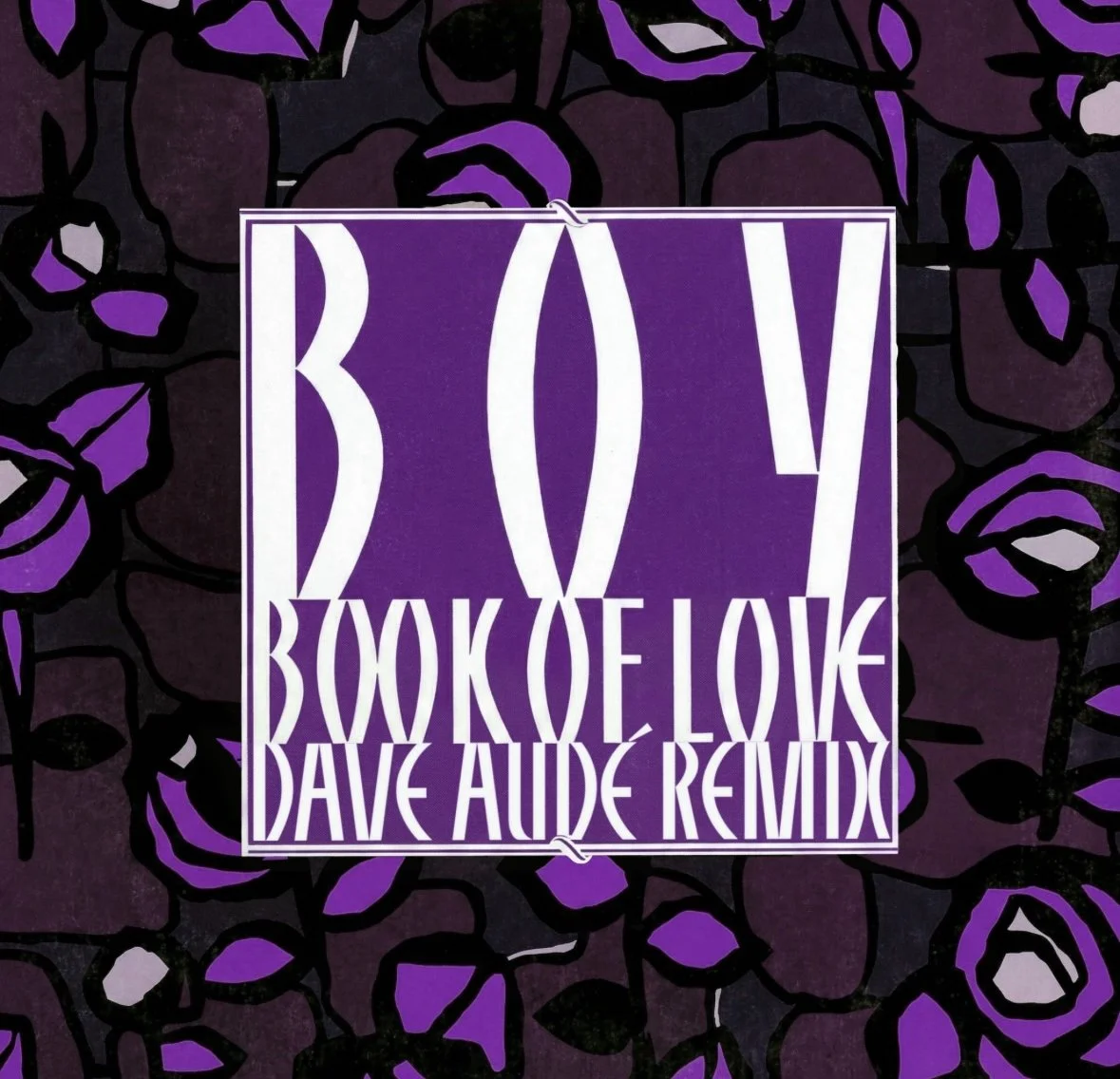
 The bass line of “Boy” sounds like a child learning to walk, confidence and momentum building with every step. Layered with slow-moving synth parts and Lauren’s breathy repetitions of “boy,” that persistent pulse underscores the mix of disappointment and defiance at the heart of Susan’s half-spoken/half-sung tale of a girl who likes boys-who-like-boys being denied entrance to a gay bar.

And then there’s the pièce de résistance, hammered out on an abandoned instrument Ted found in the recording studio. Reminiscent of church bells and clock towers, those tubular bells complement the hymn-like quality of Book of Love’s original material, becoming one of the hallmarks of their sound.

According to folklore, Sire President Seymour Stein hadn’t even gotten to the chorus of “Boy” before he announced his intentions to release it as a single. “Seymour had a great ear,” says Ted. “He knew what he liked and could always pick a diamond in the rough.” Without a record to their name, the fledgling act joined a star-studded label roster that included Talking Heads, The Pretenders, Echo & The Bunnymen, and The Cure.

 Early in the 20th century, composer Arnold Schoenberg introduced the concept of klangfarbenmelodie (“sound-color melody”): treating timbre as a melodic element. Book of Love embraced this idea, choosing judiciously from a sonic palette specific to each song. Like the turning shapes of an Alexander Calder mobile, one sound came to the fore as another receded. Each distinct element—the rumble of a timpani, clanking pipes, a whistled top line—helped balance the finished piece.

 The simplicity of Book of Love’s songs belies the sophistication of their arrangements; their music owes just as much to the spaces in between the notes as the resulting melodies and countermelodies. “That’s just how I heard the music in my head,” says Ted. He would construct songs one layer at a time, bouncing musical ideas back and forth between two boomboxes to simulate multitracking.

 The Book of Love aesthetic was already “engraved in stone” when they recorded their first batch of songs for Sire, but Ted acknowledges that their sound wasn’t yet fully realized. “If you hear the original demo of ‘Boy,’ it's almost exactly the same [as the single] except there’s no production, whereas the final version is mixed and produced to the nth degree.” With Ivan Ivan as producer and Steve Peck engineering, Book of Love now had the team and the tools to bring their ideas to life. 

 Released as a 12-inch single in early 1985, “Boy” exploded out of the gate, garnering heavy rotation in clubs. Within a few weeks, Book of Love was tapped as the support act for North American dates on Depeche Mode’s Some Great Reward tour. The quartet had previously played only a handful of intimate shows before invited friends. On March 14th, they stepped out onto the stage of Washington D.C.’s Warner Theatre to an audience of more than 1,800 Depeche Mode fans.

 The women and queer folks in those early crowds immediately cottoned to Book of Love’s special qualities. “Our true fans are all disenfranchised weirdos, and the four of us are at the top of that list,” says Ted. Then there was the gender angle: three strong women and one slender guy commanding the stage and playing their own instruments. Book of Love counted The Slits, Delta 5, and LiLiPUT among their favorite groups, and viewed themselves as part of that lineage, especially Ted. “I'm proud to be in an all-girl band.”

In an industry still rife with sexism, not everyone appreciated Book of Love. “We didn’t know how to be sex goddesses,” says Susan. “We didn’t fit into a lot of categories, so some people didn’t know where to put us.” But the ardent fans who latched on to the quartet had no trouble reading between their lines, as Ted later noted in a 2001 interview for The Advocate:

“ ‘Boy’ was about a bigger idea. It was about feeling different, wanting to be part of something, and making your own way in spite of that. Gay people just got it—we didn’t have to spell it out.”

With that initial Depeche Mode tour, Book of Love made a leap forward. “We learned on our feet and in front of big crowds,” says Susan. “Our game was constantly being upped. I was fearless after those shows.”

For the band’s next single, “I Touch Roses,” Ted had a specific blueprint in mind: Tommy James & The Shondells’ “Crimson And Clover.” He asked Ivan and Steve to think about the tremolo guitar that runs throughout the 1968 hit. “Our song had the same spirit, and I wanted that sound. And between the three of us, we came up with it.” Panning from one side of the stereo mix to the other and back again, that riff helped turn “Roses” into a second club hit, peaking at #8 on the Billboard dance charts.

Although Book of Love had been signed as a singles act, Stein gave the green light for an entire album. According to Ted, hearing “Happy Day” (issued as the B-side of the U.K. version of “Boy”) on trendsetting New York radio station WLIR convinced him that Book of Love had more to offer than he’d originally recognized. “It clicked for Seymour that we weren’t just a 12-inch act.” 

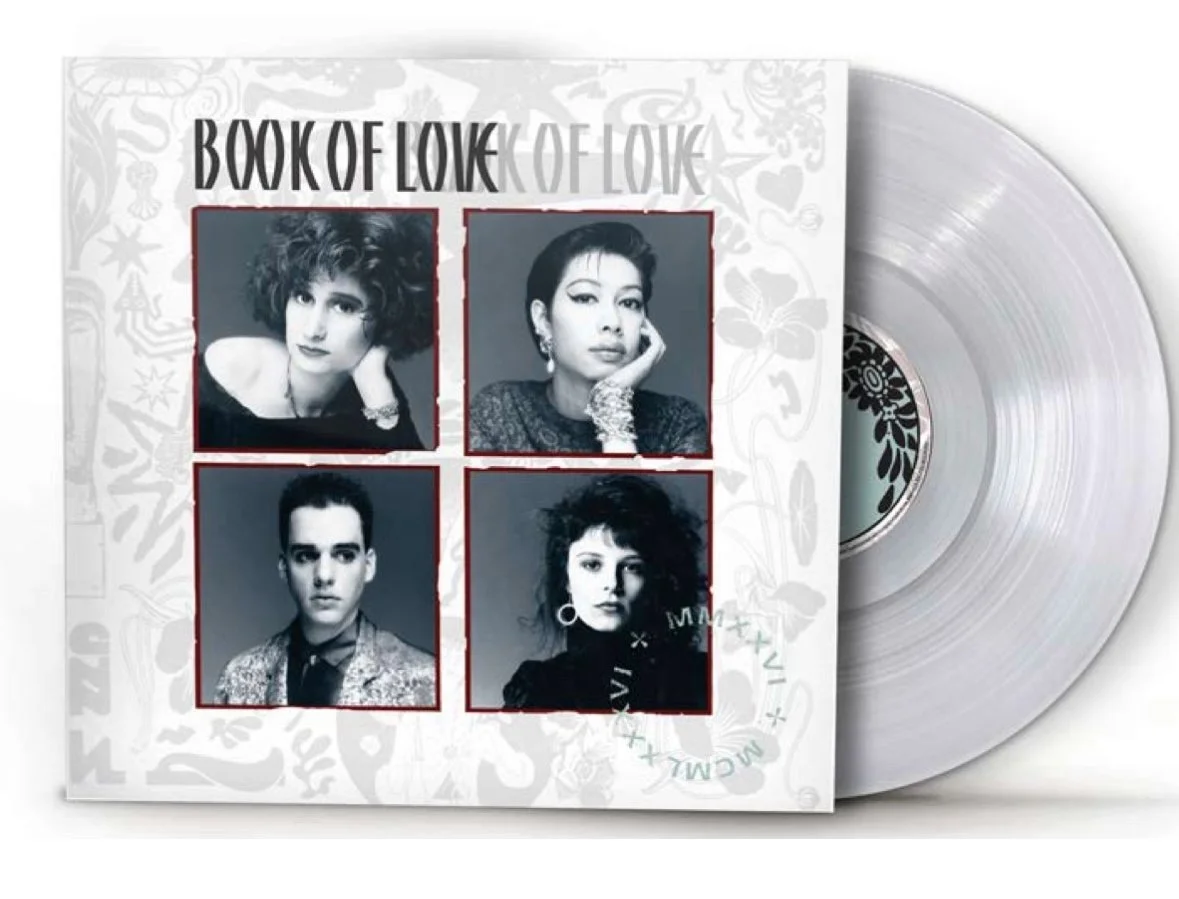
Released in April 1986, Book Of Love also includes a cover of “Die Matrosen,” originally by the Swiss, all-female, post-punk combo LiLiPUT. “There was no Internet, no LiLiPUT online lyrics page,” Ted remembers. “We did our best to understand the words, but we didn’t really know them all.” Luckily, the two bands crossed paths before recording was complete, and LiLiPUT singer/guitarist Marlene Marder later coached Susan over the phone.

 For “Modigliani (Lost In Your Eyes),” the band drew on its art school roots, including a biography of the Italian artist, alongside a reproduction of his 1919 portrait of his mistress, Jeanne Hébuterne, on the sleeve. The reverse features Susan’s portraits of the individual band members, faces and necks elongated a la Modigliani’s trademark techniques.

 Knowing they were working on an album encouraged the band to greater creative license. “We had more freedom to do whatever that we wanted, and we took advantage of that,” says Ted. Each of the 12 selections boasts its own unique character, be it agitated (“Still Angry”), contemplative (“Yellow Sky”), or disillusioned (“White Lies”). Yet through all but one track (“Late Show,” the instrumental closer of Side A), one element binds them all together: Susan’s distinctive contralto.

Book Of Love spun off two more singles. Ted says the melodica on “You Make Me Feel So Good” owes a small debt to watching Martin Gore play one every night on “Everything Counts’” for an entire tour. That percolating number became a surprise hit on Texas radio, one of several instances where Book of Love seemed on the verge of a commercial breakthrough.

Ted recalls Sire requiring persuasion to release a single with such an esoteric bent, “but that song has had a life of its own, and I’m pleased that it’s one of our most-streamed.” Confirming the band’s instincts, one of the principal architects driving the zeitgeist of ’80s movie soundtracks, filmmaker John Hughes (Pretty In Pink, The Breakfast Club) included “Modigliani” in the 1987 Steve Martin/John Candy vehicle Planes, Trains And Automobiles.

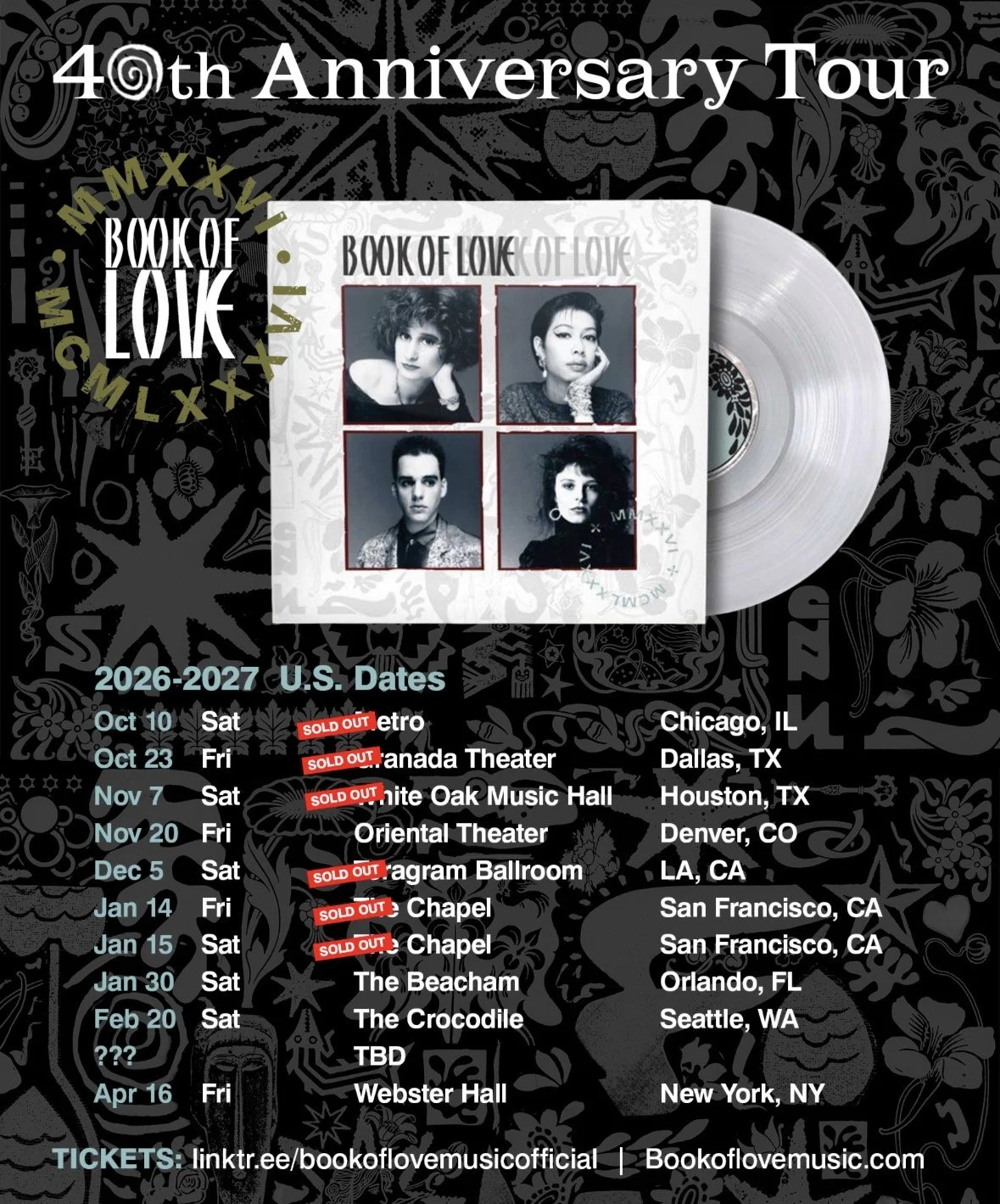
Forty years later, Book Of Love endures. Even after the band went quiet following 1993’s Lovebubble, outsiders of all stripes continued to locate themselves within the simple lyrics and uncluttered arrangements of their full-length debut. In 2001, Peter Rauhofer’s tribal house remix of “Boy” went to #1 Billboard Dance and a new best-of collection introduced the band to a whole new generation of fans.

“The first album took on a life of its own,” says Ted. “At a certain point, it’s almost beyond us. That record has meant so much to so many different people. We’ve heard that over and over again on tour.” As Susan notes, “We’re not the biggest band in the world, but the fans that we do have are very passionate.”

 In Book of Love’s heyday, they always seemed a little too femme, a little too queer, to cross over into the mainstream. But just as David Bowie, ABBA, and The Ramones helped pave the path for Book of Love, today echoes of the quartet’s commitment to authenticity and eccentricity are audible in the hits by current pop girlies Taylor Swift, Chappell Roan, and Charli XCX.

 “We were never quite pop enough for the pop audience, but not alternative enough for that alternative crowd,” says Ted. “We were almost a fusion of the two. Nowadays that fusion is palatable, and it’s charting.”

 “We just did what we knew,” says Susan. “We were committed and sincere about it, but we often didn’t know how our music fit into the world at large.” In capturing the naivete of a young band finding its voice, Book Of Love sidestepped nostalgia, retaining a freshness that has faded from many other mid-’80s favorites.

 “We don't sound like anybody else, and I don’t think we ever tried to,” she concludes. “That’s the staying power of the choices we made: just be yourself.”

Kurt B. Reighley

photo by David LaChapelle